
Nature Connection for Schools
Bring your curriculum to life with our immersive nature connection sessions!
Our curriculum-linked forest school sessions offer children the chance to explore nature while engaging in hands-on activities that align with your school’s learning objectives. Whether it’s understanding ecosystems, developing map skills, or enhancing teamwork, we tailor each session to your current themes and areas of study.
Key Details
Curriculum-Linked Themes: Activities designed to fit with your school’s learning goals, ensuring integration into your existing curriculum and areas of learning.
Flexible Locations: Sessions take place on your school grounds, in a nearby green space, or between the two locations.
Tailored for KS1 and KS2: Suitable for primary school children, with sessions customised to the age group and learning needs.
Class Groups: Up to 30 children per session, with 2 accompanying school staff members.
Flexible Timing: Each session lasts 2 – 2.5 hours, either in the morning or afternoon, suited to your school day’s schedule.
Available for Other Groups: We also cater to other children’s groups – get in touch to see if we could work with you.
Pricing
| Number of Sessions | Cost to School |
| 1 | £240 |
| 3 | £720 |
| 5 | £1200 |
| 10 | £2400 |
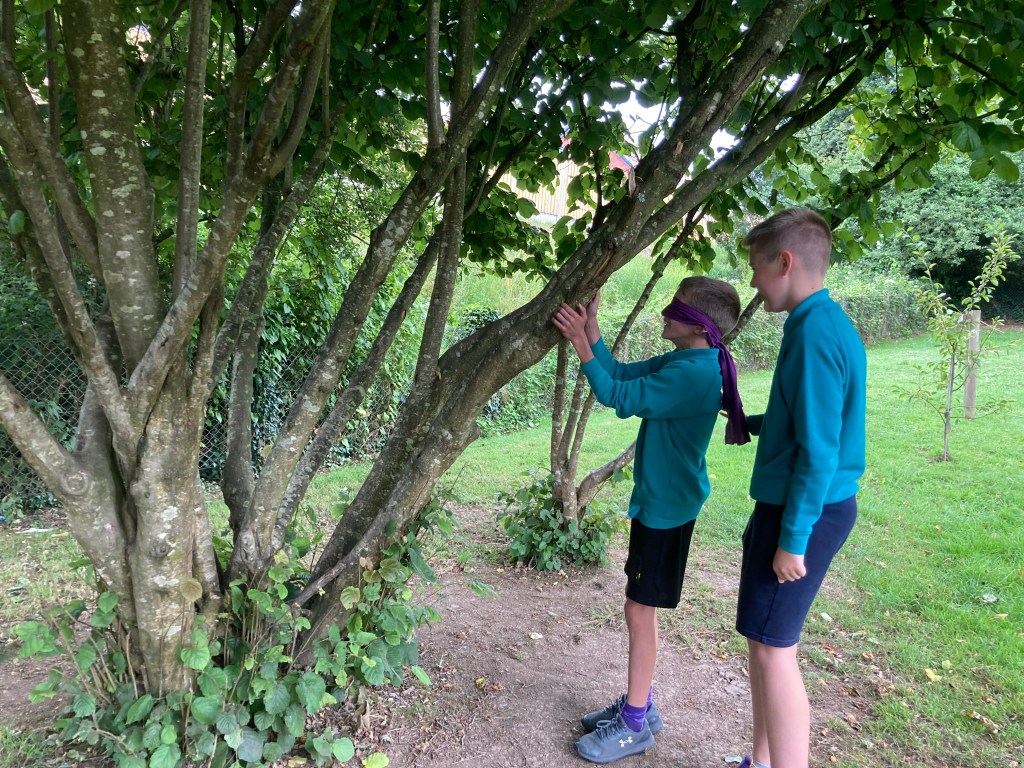
Find more info below about the Nature Connection Sessions for Schools on offer from Child of the Earth. Click the text to reveal more information on each topic.
#1: Mapping
This session will introduce students to the basics of map reading and navigation through an engaging, hands-on outdoor learning experience. Using maps, students will explore their school grounds and (depending on location) the surrounding local area, learning essential map-reading skills, understanding map symbols, and developing a sense of direction.
Click here to uncover more details.
Learning Outcomes:
- Learning basic map reading skills and techniques; recognizing symbols, legends, and scales.
- Understanding how maps represent physical spaces and can be used to navigate different terrains.
- Learn to identify cardinal directions (North, South, East, West) and use them to navigate in a fun nature-based treasure hunt.
- Enhance their understanding of the natural environment and how maps can help us appreciate and protect it.
- Reading a 6-point grid reference (KS2 only).
Curriculum Links:
Combining humanities, maths and science skills, this mapping session will include elements of geography, understanding spaces and shapes, problem solving, learning about direction, scientific enquiry, reading and interpreting data, teamwork and communication.
Back in Class:
Teachers will be provided with a lesson plan for the students to create a map of their own back in class, using all the learning outcomes from the session.
#2: Trees
This session will engage pupils with the wonderful tree life in and around the school. Through fun and interactive games and activities, the class will learn amazing facts about the trees, collecting data and information about them to help create a tree survey of the school grounds. This session will turn your class into budding tree enthusiasts!
Click here to uncover more details.
Learning Outcomes:
- Work scientifically to record observations and identify trees.
- Differentiate between deciduous and evergreen trees.
- Understand trees as habitats that promote biodiversity and learn about their seasonal changes.
- Identify common and native trees based on their characteristics.
- Gather and present data on types of tree in the school grounds.
- Learn how to calculate the age of trees from their girth.
- Co-create of a tree survey of the school grounds.
Curriculum Links:
Combining Science, Maths and Expressive Arts skills, the Trees session will include recording and presenting data, estimation, measuring, ecological identification and calculation.
Back in Class:
Teachers will be provided with a lesson plan for the students to continue to develop and annotate the school tree survey, using all the learning outcomes from the session. In addition, the class may want to go further and create a tree survey for the local area surrounding the school…
#3: Campfire
This session will bring children closer to an exciting, useful and mysterious element – fire! Children will learn about the cultural and mythological significance of fire, as well as some basic fire safety, before constructing their own ‘fairy’ fire. They will then get the chance to use fire steels to light the group campfire. We will discuss the science and myths of fire further, sing songs and maybe even toast some marshmallows….
Click here to uncover more details.
Learning Outcomes:
- Understanding the dangers of fire; safe practices around lighting, tending to and extinguishing a campfire.
- Developing the skills to light a fire using a traditional flint and steel technique.
- Developing the skills necessary to safely manage a lit fire.
- Identifying the best types of fuel for a campfire, including where to find natural tinder and dry wood and how to prepare these elements.
- Developing an awareness of the cultural, spiritual and historical significance of fire for humans.
- Sharing songs and stories; cooking food on the fire.
Curriculum Links:
Combining all 6 Areas of Learning, the campfire session is a fantastic addition to any school curriculum, linking in to many other topics. The session will include elements of biology, physics, measurement, language, local geography, fine motor skills, teamwork and communication.
Back in Class:
Teachers will be provided with a lesson plan for the students to continue to develop ideas around the history and cultural significance of campfires through writing a story that can be told around their next campfire.
#4: Dens and Shelters
Dens and shelters are the best way to take hide-and-seek and homemaking games outside, whatever the weather! This session will give children the chance to learn various basic knots and techniques to build dens and shelters, either from rope and tarpaulin or natural elements such as sticks and foliage. They will be inspired to use their school grounds in a whole new way!
Click here to uncover more details.
Learning Outcomes:
- Understanding the basic theory of dens and shelters, when and where to build, which type to choose
- Learning knots such as clove hitch, timber hitch, tension knot (dependent on age and skill level)
- Using measurement and calculation to make decisions about the shelter design
- Use communication and teamwork to design and build a den with rope and tarpaulin
- Understanding of the types of natural material used for shelters in the wild, and how to utilise each element
- Design and build a natural shelter (dependent on session location and availability of natural resources)
Curriculum Links:
Combining humanities, maths and science skills, this dens and shelters session will include elements of geography, understanding spaces and shapes, calculation and measurements, fine and gross motor skills, problem solving, teamwork and communication.
Back in Class:
Teachers will be provided with a lesson plan for students to design, write and produce an instruction booklet or cartoon entitled ‘How to Build a Den’, using the knowledge gained in the session, with their own creative twist!


 Child of the Earth CIC Plentyn y Ddaear